


Manufacturing Industry
Changes in manufacturing processes
From the 1970s on there were substantial changes in manufacturing processes. This particular factory was not effected in the way that the car manufacturers and others where. The smelting pouring and moulding processes were not particularly suited to being done by robots. Developments in pressed metals meant that some components were cheeped made by pressing rather than pouring and there was a loss in production, some jobs were lost but not because of ICT as such.
To the right is the interface of CAD software.
The main effected area was the machine shop where the advent of CAM had a significant effect on employment and work processes. Gradually five sixths of the work force were redundant as new machine milled ground and turned the components more or less automatically. The remaining workforce was substantially better skilled with computer programming rather than manual skills. However the work was fair boring machine minding type tasks rather than active work. Absenteeism on the workforce increase by 4 fold in the 20 years from the 70s to the 90s. This could have been for a range of other social reasons.
The drawing office was effected by CAD, however as many of the components made were designed between the two world wars the effect was not as great as it was in many drawing offices employees dropped by 80% but this was a very gradual process, there wasn't a great deal of redundancy, people left and were not replaced. In many drawing offices numbers were reduced to 5% of the original. In our factory the number of grades of employees was reduced from 4 to 2. Those who remained had very different skills from the original workers There was substantial retaining needed and some employees could not cope with the change to the new methods of working.
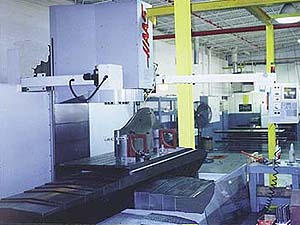
To the left is a Multiple-Axis CNC Machining Centres for Parts and Tool Manufacturing
A third change adversely effected the scientific employees the test of samples of the metals was automated and many lost their jobs. But the numbers involved here were small.
© LEV
