


Liquid Crystal Displays
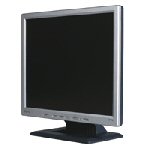
LCDs have fairly recently become a popular for the home computer market. But the LCD technology is not new, indeed it was discovered in the early 1960s and used for a range of devices like pocket calculators and digital watches from the early 70s. There is however important differences between the early devices and the current range of computer monitors.
The early devices where monotone (mostly black and white) the display area was fairly small and they used reflected light. This last point means that they are not visible in the dark. . This type of LCD has higher contrast than the transmissive type. The absence of a lamp significantly reduces power consumption, allowing for longer battery life in battery-powered devices; small reflective LCDs consume so little power that they can rely on a photovoltaic cell, as often found in pocket calculators.
In the current computer monitors (and TVs) the Liquid crystal is back-lit. This type of LCD is used in applications requiring high luminance levels such as computer displays televisions personal digital assistants, and mobile phones. The illumination device used to illuminate the LCD in such a product usually consumes much more power than the LCD itself.
Although the way LCDs actually do thier job is part of a computer science degree. This syllabus does not concenr itself with the detail of how a liquid Crystal display works. Other than to say that the monitor has a RGB cluster of pixels in the same way as a CRT monitor. For those of you ineterested in this level of detail. See How stuff works or Wikipedia - both of which have good sections on this
© LEV
