


Keyboards
The QWERTY keyboard remains the most common input device although in terms of speed of input it is one of the most limited. It is however suitable for entering a wide range of data and it is a device that is familiar every clerical worker. The QWERTY layout was designed to reduce the chance of jamming on early mechanical typewriters. This was achieved by spreading the most commonly used letters around the keyboard, effectively slowing the typist down.
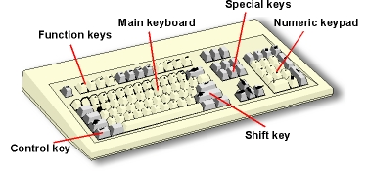
Improved layouts have been designed and they do increase the speed at
which data can be entered. However they have never become popular, partly
because there has been no general agreement on a new standard layout but mainly
because of the time that people have invested in learning to use the existing
arrangement.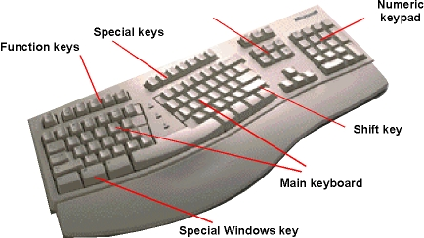
Concept Keyboard
This is a keyboard-like device with a number of pictures instead of the usual keys. The user indicates input by pressing one of the pictures. It is used as an input device for young children in Computer Based Learning systems and it is sometimes used in cafés and pubs where there is a computerised till. A feature of this device is the capability to change the overlay to provide a different set of pictures. This is particularly useful in computer based learning as a single keyboard can then be used with a variety of overlays.
Concept keypads are faster but very limited They are used in shops for example balances where the goods are pictured. They are also used in pubs where the drink is named.

© LEV
